I had my class watch a video clip in class today where Milton Glaser spoke about how great design makes ideas new. I was really pleased to see that the majority of students seemed genuinely interested in listening to what he had to say despite the generational divide. Here’s the clip see what you think.
Category: Design Education
Pushpin Graphic Remix – An Art School Experiment – Part 1
As an instructor at the Art institute of California – San Diego, each new quarter brings with it the challenge of coming up with a fresh assignment for each class; which incorporates the core competencies of the class, while inspiring the students to be enthusiastic and see the value of how the project will advance their design skills and experience.
Design Team 1 and the Pushpin Project
This quarter one of the classes that I will be teaching is Design Team 1. I have had a lot of experience in team-based projects, indeed that is the main thesis of this blog; so I was excited to take this on, knowing full well the challenges working with students on teams. So I wanted to create a project that would first of all, give them an opportunity to showcase their creative talents within the parameters of real world job specifications and also demonstrate the benefits of collaborative synergy and how it can enhance the productivity of each member of a team.I think that the Pushpin Graphic is a shining example of how collaboration can benefit all who participate. Creating nothing short of a mastermind group.

My Introduction to the Pushpin Graphic
Back when I was a student I had the opportunity to study at the prestigious School of Visual Arts in New York. The great thing about attending the school is the opportunity to study with legendary graphic designers, typographers and illustrators. I took classes with notable artists such as Milton Glaser, Seymour Chwast, Paul Davis and got to meet James McMullan whose studio was and probably still is, located in the same building as Milton Glaser, Inc. These visionaries are just some of the group of artists who created and contributed to the Pushpin Graphic and later established Pushpin Studios. The publication lasted for eighty-six issues spanning the period of 1957-1980 and the work that came out of there has been a major influence in Graphic Design indeed creating a new design movement.
History of Pushpin Graphic
Pushpin Studios had a major effect on the visual design of the
 1960s and 1970s. The two principal founding members, Seymour Chwast and Milton Glaser, achieved extremely high profiles in the graphic-design field, both through Push Pin and independently. But they began in the early 1950s as hungry design students out to make an impression and a buck. They were fabulously successful.
Why I chose this Project – Pushpin Graphic Remix
I feel the this project will give my students a chance to showcase their talents and will serve as a promotional piece. The challenge is to showcase your talent while collaborating with a team to interpret a theme that allows for a lot of creative innovation. I hope it will teach these young creatives the power of collaboration and innovation. I will be posting more about the Pushpin Graphic and more on the project and the experience my students have while doing it.
Art and Copy – the Perfect Synergy
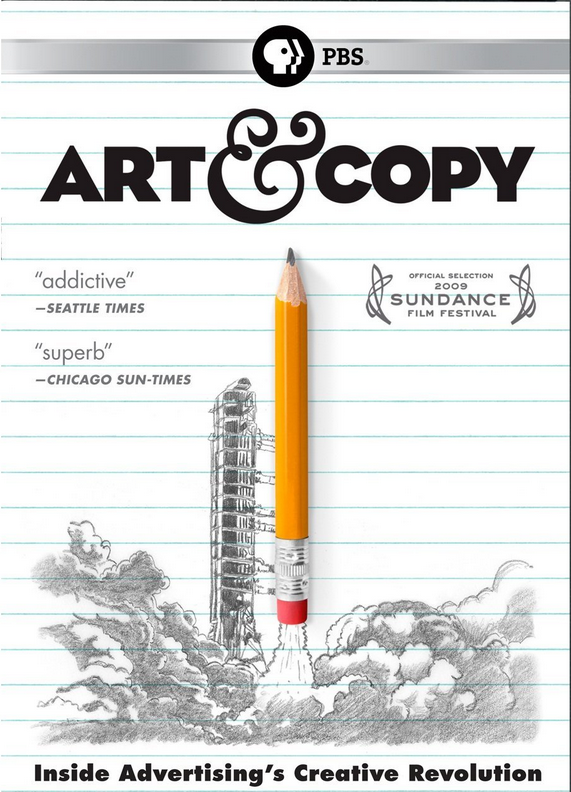 I was watching the movie Art and Copy – see video clip at the bottom of this post and one of the things that stood out to me was the fact that Bill Bernbach revolutionized adverting by having the vision to team copywriters and art directors. When I began my career this was the norm so it never occurred to me that this practice was not always the way things were done.
Bill Bernbach was at the heart of the advertising “Creative Revolution” (of
the 1950′s and 1960′s). The ‘Creative Revolution’ was about creating a
more informal and egalitarian atmosphere / work model in the ad agency
so as to encourage creativity. Before that creatives were not respected — they were the minions and the ad executive ran the show. Bernbach’s changed all that and his vision paid off in producing some of the most memorable ad campaigns of all time.
He recognized that bringing together creative teams of copy writers and art directors was the most logical and powerful, synergistic approach to the creative process. His revolutionary campaign for Volkswagen – “Think Small” still inspires young creatives today.
There is much more to the movie – I barely scratched the surface here and it is definitely worth seeing if you are interested in the creative process or work in the field of visual communications.
What are Visual Oxymorons?
This short movie from Before and After Magazine does a good job of explaining a visual oxymoron. I agree with everything except the wavy type at the end.
The Making of Crossing Palettes
I really enjoyed working on this collaborative project “Crossing Palettes” that brought together three disciplines — graphic design, interior design and culinary arts and lasted for 4 years. Just before the project ended – we did four showcases a year for four years, a total of 16(!) we had the opportunity to film one of the showcases. This video takes you from the beginning of the day to the end of the night and I think we portrayed what it was like to work together and how much fun we had doing it. I hope you enyoy watching it.

Class: Corporate Communications
Instructor: Lindsey Baker
Restaurant Concept – Frosted
Graphic Design by: Chris Henderson
HERE IS THE VIDEO
Videographer: Israel Navaro
Editors: Israel Navaro and Lindsey Baker
How to Caculate What to Charge Clients for Creative Services
 From time to time my students will email me because they are stumped when asked by a potential client (perhaps their first real paying design job) how much will they charge for design services. They are afraid if they say the wrong thing or demand too much they won’t get the job, yet they want to be paid fairly. I got an email yesterday from a student named Jamie…
Jamie wrote…
Hi Ms. Baker – “This is Jamie G. I’m not sure if you remember me but I had you for Corporate Communications and Branding. I had a question I thought you could help me answer. A sushi restaurant I work for wants me to redesign their menus for the entire restaurant including all food, drinks and dessert. I am kind of confused about the pricing aspect though and am wondering how to go about finding a decent price to tell them. They just told me yesterday about this so I have a little time to figure it out…”
Here is my recommendation:
Determine the scope of the work
My best advise is to create a short concise estimate/agreement as
to what the scope of the work is – in other words get it in writing as
to what exactly what (how many pieces, how many versions, etc.) you will be
providing for the amount that you are quoting. This keeps the client and you on the same page about what you agreed to complete for “x” amount of dollars.
Hourly rates
The next step is to determine an hourly rate that you will be satisfied receiving for the work. Hourly rates vary by state, years of experience, and frankly, how much you want to work for a specific client. Sometimes taking a little less on a job that will get you experience in an industry that you want to work in is worth it, (paying your dues) as long as you don’t feel in your gut that you are being taken advantage of.
Calculating the Price
Next you must figure out how long each task will take. Be prepared to show time sheets so the client knows what they are paying for. You
should
keep track of your time on projects even while still in school, so you have
a good idea about how long it takes you to do a design task. Otherwise
you will have to guess how long it will take you to complete the work
and
then I suggest you add on about 25% more to make sure you cover your
time. If it turns out to be less time you can adjust the bill and you
still look good to the client, because you came in under budget. You
can tell the client that it is an estimate and you like to create a
buffer, but will definitely adjust the price if you over-estimated the
cost.
should
keep track of your time on projects even while still in school, so you have
a good idea about how long it takes you to do a design task. Otherwise
you will have to guess how long it will take you to complete the work
and
then I suggest you add on about 25% more to make sure you cover your
time. If it turns out to be less time you can adjust the bill and you
still look good to the client, because you came in under budget. You
can tell the client that it is an estimate and you like to create a
buffer, but will definitely adjust the price if you over-estimated the
cost.
Other Expenses
Clients like to know what to expect so they can budget for the expense, so hidden costs can be unsettling to them. Make sure that if you are laying out money for things like stock imagery, illustrations, photography or other items, you determine the costs and include that in the agreement. Also, determine an
hourly rate for any work they my ask for that goes over
the scope of what you agreed to in the estimate/agreement. Include that
in the
written agreement as well. For example, have an hourly rate that would
be charged for anything over the scope of the original project.
If you
handle the printing you must charge
for your time on that as well; meaning running back and forth to the
printer, etc. Sometimes they will want to save money by handling this
themselves. You can provide a service by recommending a good printer
that is willing to work with a non-professional to ensure that the work
turns out well. But it is probably more cost effective for them to
have you handle the printing, so line up some good printers ahead of
time.
Getting paid
In terms of payment, I always ask for a third
upfront, this assures me that they are serious about the project and
are willing to make a commitment. I write in the agreement that payment
is due when I deliver the final work. In big companies you
have to get a purchase order number from their accounting department
before you start to ensure payment. Also, you probably will have to
wait for their accounts receivable (usually 30 or 60 or even 90 days)
cycle to get paid.
Resources:
One of my favorite resources for templates for forms and contracts is Business and Legal Forms for Graphic Designers (3rd Edition) Amazon link .
Please Note:
This
post assumes that you are working from a home office and will claim % of office space used from housing costs, will depreciate your equipment and claim business expenses on your income taxes. The rates charged by professionals that run a brick and mortar design studios and maintain an full time staff are factored differently.
 Synergy Creative